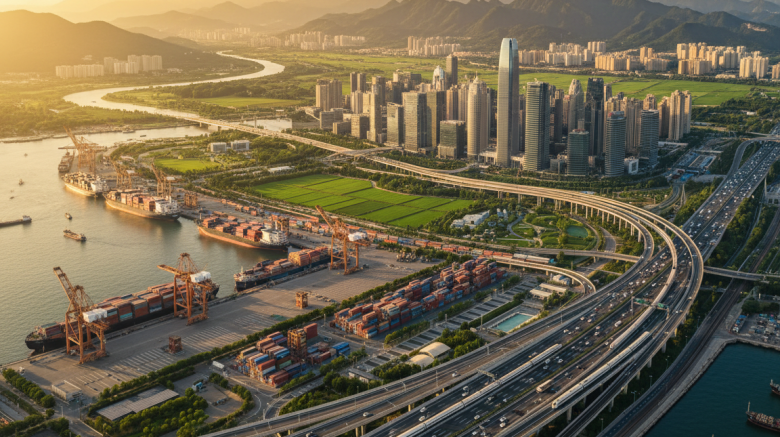
Henry Ford once said, “Coming together is a beginning; keeping together is progress; working together is success.” That collaborative spirit powers a massive global undertaking. The Belt and Road Initiative (BRI) launched by China seeks to expand international connections. As of late 2023, it involved 151 countries. Collectively, these nations make up a substantial portion of global output and population.
The initiative is wide-ranging. It supports new railways, ports, and power systems. It further promotes smoother trade procedures and closer cultural relations. Its aim is to boost trade, investment, and economic growth.
Belt and Road Facilities Connectivity

Belt and Road People-to-People Bond

Belt and Road Initiative Infographic
This report offers a detailed look at the BRI’s evolution. We will analyze how its infrastructure push shapes international cooperation and development.
Key Takeaways
- The Belt and Road Initiative (BRI) is a major Chinese strategy focused on global economic integration.
- It spans 151 countries, representing a major share of world GDP and population.
- The program combines physical infrastructure, including transport and power, with softer forms of cooperation like policy alignment.
- One central goal is to expand global trade and cross-border investment.
- The initiative seeks to stimulate economic growth and development across participating regions.
- This analysis presents a comprehensive look at how the BRI prioritizes facilities connectivity.
- Understanding this project is key to grasping shifting patterns in global infrastructure and cooperation.
Introduction To The BRI Grand Vision
In that fall announcement, President Xi Jinping proposed reviving the spirit of historic trade routes for the modern era. He unveiled the concept of building the Silk Road Economic Belt alongside the 21st-Century Maritime Silk Road.
The project was not presented as a closed or exclusive grouping. Rather, it reflects a new vision for collaboration among diverse countries and cultures.
The Chinese government formalized these plans in a March 2015 document titled “Vision and Actions on Jointly Building the Silk Road Economic Belt and the 21st-century Maritime Silk Road.” The paper established the core priorities and the mechanisms for implementation.
Officials often describe the entire undertaking as a “public good” offered by China. Its stated purpose is to promote shared development and mutual benefit for all participants.
An important tool is deeper policy coordination. The bri seeks to align national development strategies for a synergistic effect.
The broader geographic vision is expansive. It aims to link the dynamic East Asian economic circle with the developed European economic circle.
Doing so would accelerate the formation of an integrated Eurasian market. This broad vision forms the basis for the initiative’s five central pillars of cooperation.
From Ancient Caravans To Modern Corridors: Historical Context
The history of cross-continental exchange began long before the 21st century, with camel caravans moving along dusty routes. Across more than two millennia, a broad web connected the leading civilizations of Asia, Europe, and Africa.
That network formed the original silk road, a set of routes for commerce and cultural exchange. Its legacy provides the foundational narrative for today’s ambitious global plans.
The Silk Road Legacy
Silk, spices, porcelain, and other goods moved through these corridors. More importantly, ideas, religions, and technologies spread between East and West.
The ancient silk road was never one single road. It was a complex web of land and sea connections.
Its deepest value rests in the spirit it symbolized. Scholars describe a “Silk Road spirit” centered on peace, cooperation, and shared learning.
That spirit is viewed as a common historical inheritance. It emphasized openness and mutual benefit for all participating societies.
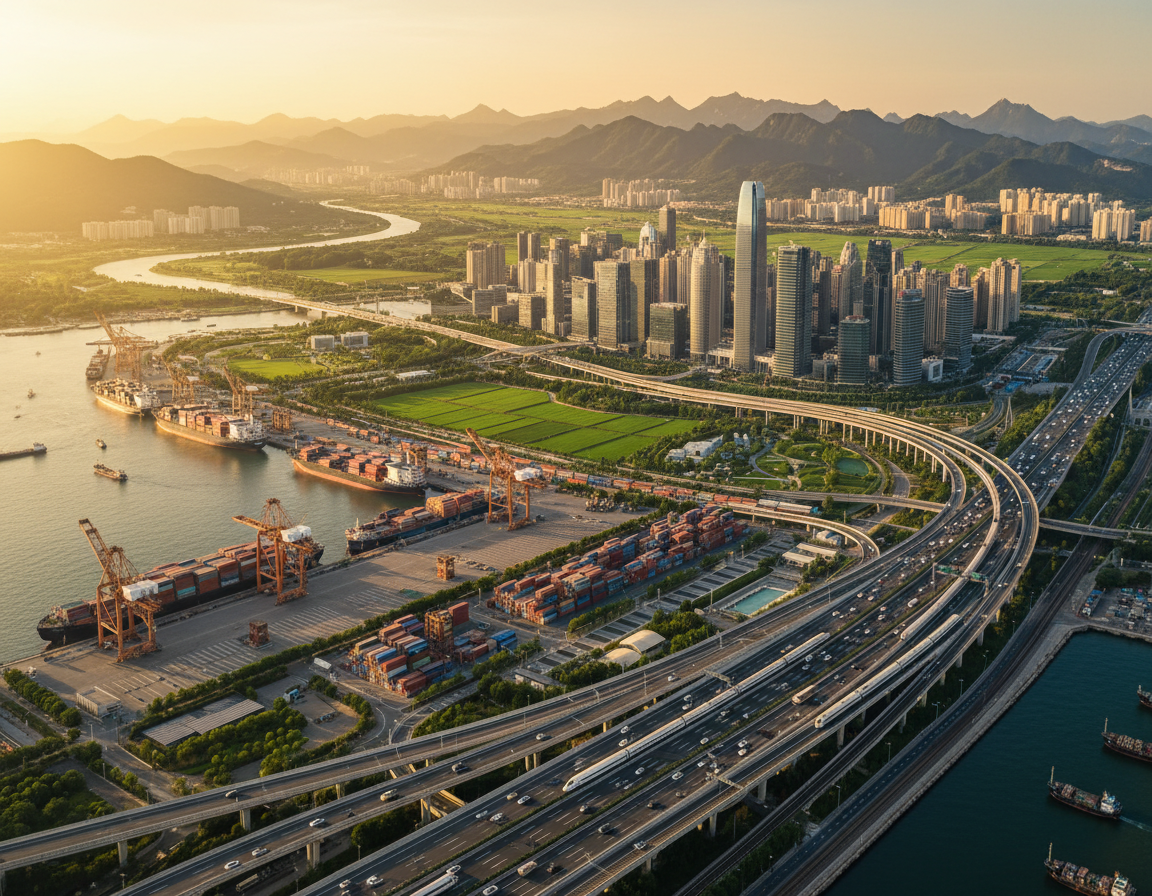
That tradition of connection is what today’s frameworks attempt to restore. Ancient caravans have given way to a vision of high-speed rail and intelligent ports.
Xi Jinping’s 2013 Announcement And The BRI Framework
During state visits in the fall of 2013, President Xi Jinping delivered pivotal addresses. In Kazakhstan, he proposed building a Silk Road Economic Belt.
In a later speech in Indonesia, he advanced the idea of a 21st Century Maritime Silk Road. Together, these two announcements officially launched the modern initiative.
The addresses intentionally referenced ancient silk traditions. They presented the new project as carrying forward that old spirit for modern demands.
The Silk Road Economic Belt centers on land-based corridors through Eurasia. The 21st Century Maritime Silk Road envisions sea lanes linking China to Southeast Asia, Africa, and Europe.
Combined, they create the central foundation of the broader strategy. This framework converts a historical idea into a living foreign-policy agenda.
Its geographic reach soon stretched far beyond the original routes. Today, it covers over 150 nations across multiple regions of the world.
Regions like South Asia and Central Asia are key focal points. The objective is to deepen regional cooperation and promote common development.
So, this huge undertaking is not portrayed as something entirely new. Instead, it is presented as a revival and logical extension of a long tradition of international exchange.
The Pillars Of Connectivity: Hard Infrastructure And Soft Infrastructure
Today’s economic corridors need more than physical construction alone. They rely on a dual structure of physical and non-physical elements.
That structure sits at the heart of the global belt road initiative. The hardware of connectivity has limited value without systems to manage it.
These two dimensions must function in tandem. Their synergy is what produces genuine integration and mutual benefit.
Five Key Areas Of Cooperation
The Chinese government presents a broad strategy. It is built upon five interconnected pillars of international cooperation.
- Coordinated Policy: Synchronizing development plans across countries to create a common direction.
- Facilities Connectivity: Building the physical backbone of ports, roads, and railways.
- Smooth Trade: Eliminating obstacles that slow the movement of goods and services.
- Cross-Border Financial Integration: Mobilizing capital and enabling cross-border financial services.
- People-Centered Bonds: Encouraging cultural and educational exchange.
These five areas capture the broader reach of the bri. They push beyond basic construction toward deeper systemic integration.
Hard Infrastructure: Building The Physical Network
This remains the most visible side of the initiative. It consists of large-scale engineering projects across multiple continents.
New rail links, highways, and pipelines form fresh channels for trade. Ports and airports become vital hubs in a global network.
Demand is immense. According to the Asian Development Bank, developing Asia alone needs $26 trillion in infrastructure spending by 2030.
Chinese state-owned firms frequently take the lead on these projects. Their involvement often adds construction speed and large-scale capacity.
Their work is supported by powerful financial institutions. The China Development Bank and the Export-Import Bank of China supply vital financing.
Such financing makes major projects possible. It helps fill a major gap in development finance worldwide.
Soft Infrastructure: Setting The Rules Of The Road
Physical networks require governance in order to function. Soft infrastructure creates the legal and financial environment for success.
The process starts with policy coordination. Participating states align customs processes and technical standards.
That lowers delays and costs for businesses. Trade agreements and investment pacts provide security and predictability.
A key goal is deeper financial integration. That includes greater use of local currencies in trade and investment.
Dedicated funds help support this ecosystem. The $40 billion Silk Road Fund finances strategic projects.
The Asia Infrastructure Investment Bank (AIIB) mobilizes additional capital. It functions as a multilateral institution with members from around the world.
Taken together, these mechanisms help lower transactional risk. They help ensure physical assets produce the promised economic gains.
This soft layer turns concrete and rail into corridors of genuine cooperation. It is the essential software for the hardware of development.
Case Studies In Connectivity: Flagship Projects And Impact
Beyond maps and agreements, the story unfolds through steel, concrete, and dramatically changed travel times. Studying individual projects reveals how broad strategies are turned into reality.
These flagship undertakings show the scale and ambition of this international cooperation. At the same time, they expose the practical challenges of implementing initiatives on such a large scale.
This review considers three high-profile cases. Each showcases a different facet of the broader vision for global links.
The China-Pakistan Economic Corridor (CPEC): Flagship Megaproject
Often called the crown jewel of the broader framework, CPEC is a massive undertaking. It runs for roughly 3,000 kilometers from Kashgar in China to Gwadar Port in Pakistan.
Rather than being a single road, the corridor consists of a large bundle of projects. Its components include roads, railways, and optical fiber infrastructure.
Energy has received a significant portion of the investment. New power plants aim to solve Pakistan’s chronic electricity shortages.
The goal is to create a modern trade and transport artery. For China, it offers a more secure route to the Indian Ocean that avoids possible maritime chokepoints.
For Pakistan, the promised benefits include major infrastructure upgrades and economic growth. A central part of its appeal lies in its hoped-for impact on local development and job creation.
Gwadar Port Within The Maritime Silk Road
Gwadar functions as the maritime terminus of CPEC and a key strategic node. A Chinese firm has a long-term lease to operate the port through 2059.
The port’s development is central to the maritime dimension of the broader initiative. The aim is to turn it into a major commercial hub and potential naval facility.
Its intended role is to link overland networks with sea-based routes. It would connect the overland corridors of Central Asia with key shipping lanes.
Still, progress has run into obstacles. Reported delays in construction and slow commercial activity raise questions.
Analysts closely monitor Gwadar as a test case. Its success or failure will significantly influence the maritime strategy’s credibility.
The Jakarta-Bandung High-Speed Railway: A Model Of Partnership?
In Southeast Asia, Indonesia’s high-speed rail project stands out. The $7.3 billion project officially opened in October 2023.
It showcases Chinese high-speed rail technology abroad. Travel time between the two cities is reduced from roughly three hours to under one hour.
The project is often presented as a case of bilateral cooperation. It involved a joint venture between Indonesian and Chinese state-owned companies.
Still, it also ran into common obstacles. Delays due to land acquisition and licensing issues pushed back its completion.
Its impact will be measured by its ridership and economic ripple effects. It serves as a modern symbol of upgraded regional connectivity.
Comparative Snapshot Of Major BRI Projects
| Project Title | Project Location | Core Features / Scope | Primary Goal | Status And Key Challenges |
|---|---|---|---|---|
| China-Pakistan Economic Corridor (CPEC) | Pakistan | A 3,000-km corridor featuring roads, railways, pipelines, and energy projects. | Build a secure route from western China to the Arabian Sea while supporting growth in Pakistan. | In progress; faces security problems and questions over long-term financial viability. |
| Development Of Gwadar Port | Gwadar In Pakistan | Deep-sea port with commercial and potential naval facilities. | Act as a strategic hub linking maritime and overland Silk Road routes. | Active but underutilized; facing weak commercial growth and local friction. |
| Jakarta-Bandung Rail Project | Indonesia Region | 142-km high-speed rail line reducing travel time significantly. | Demonstrate technology while advancing regional integration and economic activity. | Started operations in 2023; experienced major setbacks due to land acquisition issues. |
These case studies reveal shared patterns. Large projects frequently face logistical, political, and financial complications.
Issues such as land acquisition, budget overruns, and arguments about long-term viability are common. Such investment creates real assets but can also generate new dependencies.
For host countries, the trade-offs are substantial. The promise of employment and development is often weighed against debt risks and external leverage.
Taken together, these projects provide visible evidence of the bri’s scale and ambition. They are physically transforming transport networks across developing countries.
They illustrate how capital is translated into concrete infrastructure. That process is intended to encourage stronger regional integration and greater trade.
The real test will be whether these corridors produce sustainable and inclusive growth. Their impact on local communities remains crucial.
Assessing The Balance Sheet: Benefits And Emerging Challenges
Evaluating the global initiative’s impact reveals a complex mix of economic promise and financial peril. The vast undertaking creates meaningful opportunities for many countries.
It also faces intense scrutiny over its methods and long-term effects. A balanced view is necessary to understand the full picture.
Projected Economic Gains: Trade, Growth, And Development Outcomes
Participating nations frequently pursue faster economic advancement. The program aims to support that progress through upgraded connections.
Roads and ports built under the program can significantly lower the cost of trade. This can strengthen the movement of goods between markets.
For China, these projects generate overseas demand for Chinese companies. This allows China to deploy excess industrial capacity and capital abroad.
This strategy helps internationalize the Chinese currency. It also secures vital energy supply routes.
Partner nations gain modern infrastructure they might not otherwise afford. Such improvements can draw in foreign direct investment.
These projects can be followed by new factories and industrial parks. The aim is to encourage job creation and wider development.
Enhanced transport networks integrate remote regions into the global economy. The potential for economic growth is a powerful draw.
Debt Dilemmas And “Debt-Trap” Diplomacy Concerns
Financing these ambitious projects often involves large loans. Many host countries have only limited repayment capacity.
Examples like Sri Lanka and Zambia show how severe debt distress can emerge. Some analysts describe it as a strategic tool of leverage.
Chinese loan terms are often criticized as lacking transparency. That can leave vulnerable economies burdened for decades.
In the event of default, a government may have to surrender control over strategic assets. A frequently cited example is Hambantota Port in Sri Lanka.
This debate questions the sustainability of the entire bri model. It raises alarms about sovereign risk and financial dependency.
Local populations may experience serious impact if debt pressures lead to austerity. Debt sustainability is now a central issue in talks.
Geopolitical Skepticism And Strategic Pushback
Not all nations welcome the expanding cooperation. Some see it as a vehicle for expanding geopolitical influence.
India rejects the China-Pakistan Economic Corridor outright. It cites sovereignty concerns over the Kashmir region.
In Europe, Italy signaled its intention to leave the belt road initiative. Its entry had occurred under an earlier government.
The United States and its allies urge caution. They propose alternative infrastructure plans for the developing world.
Attendance at the 2023 forum for the road initiative showed declining interest. Many Western and Asian leaders did not attend.
This rising skepticism helps define the initiative’s disputed role in world affairs. Much of its reception is now framed by strategic rivalry.
Balancing The Ledger: Benefits And Risks
| Primary Stakeholder | Primary Benefits | Key Challenges And Risks | Representative Examples |
|---|---|---|---|
| China Itself | New export markets; currency internationalization; strategic route diversification. | Debt-related reputational risks and geopolitical backlash. | Using industrial overcapacity in global projects. |
| Participating Countries | Infrastructure expansion; employment creation; stronger trade and investment inflows. | Heavy debt burdens; possible loss of control over assets; opaque contracts. | Sri Lanka’s Hambantota Port; Zambia’s debt default. |
| Global Order | Greater cross-border connectivity; help close infrastructure gaps in developing areas. | Rising geopolitical tension and bloc formation; worries about lending standards. | Pushback from the G7 through alternatives such as the PGII. |
The table above captures the two-sided narrative. Each benefit is paired with a significant counterweight.
This tension now defines where the bri stands. The world watches how these projects evolve.
The following section examines how priorities are changing in response. An emphasis on sustainability and quality is beginning to emerge.
The Road Ahead: Changing Priorities And The “Green” BRI
The narrative surrounding one of the world’s most ambitious development programs is being rewritten for a new era. Following a first decade dominated by large-scale building, priorities are visibly changing.
Official documents now emphasize sustainability and innovation. This marks a major evolution in the program’s stated goals and methods.
Shifting From Megaprojects To Sustainable Development
A 2023 Chinese government white paper clearly signaled this change. It outlined a rebalancing away from traditional megaprojects.
The updated focus areas center on green development, digital connections, and cooperation in science and technology. The shift reflects both external criticism and China’s own internal economic recalibration.
Financial data underscores the shift. New investment across partner nations declined to $68.3 billion in 2022.
That is well below the 2018 peak of $122.5 billion. Engagement is increasingly selective in scale and focus.
The “High-Quality” BRI And New Global Initiatives
The idea of a “high-quality” belt road initiative has become central. President Xi Jinping used his 2023 forum speech to set out eight core commitments.
Those commitments emphasize building a multidimensional connectivity network. They also emphasize integrity-based cooperation.
The framework is now being integrated into China’s wider global agenda. That includes the Global Development, Security, and Civilization Initiatives.
New efforts like the Global AI Governance Initiative are also integrated. The goal is to form a more cohesive set of international policy tools.
Even the idea of facilities connectivity is evolving. It now clearly includes digital systems and sustainable infrastructure.
Strategic Focus Evolution
| Strategic Focus Area | Earlier Emphasis (First Decade) | Evolving Focus (“Green” And High-Quality) |
|---|---|---|
| Main Objective | Fast construction of transport and energy infrastructure. | Sustainable, financially viable, and technologically advanced systems. |
| Main Sectors | Highways, ports, railways, and fossil-fuel-based power plants. | Renewable energy, digital corridors, and research parks. |
| Cooperation Model | Project finance on a bilateral basis led mainly by Chinese contractors. | More multilateral partnerships, technology transfer, and third-party market cooperation. |
| Commonly Reported Metrics | Total contract value together with the number of large projects. | Green investment share, digital inclusion, and local job skill development. |
Long-Term Trajectory In A Shifting Global Context
The shift reflects a complex and changing global setting. Internal Chinese economic factors demand more efficient capital allocation.
External geopolitical pressures and debt sustainability concerns also shape the path forward. The program must demonstrate tangible benefits for all partners.
Its long-term direction appears to favor a more adaptive and nuanced strategy. Success will depend on delivering shared growth without imposing financial strain.
The pivot to “green” and high-quality development is a pragmatic adjustment. It seeks to ensure the initiative’s relevance and resilience for the coming decades.
Closing Conclusion
The BRI, as a cornerstone of Chinese foreign policy, is intended to reshape international relations through mutually beneficial cooperation. It may take many years before the success of this long-range plan can be judged properly.
Our analysis reveals the transformative potential of enhanced global links. It connects the legacy of the ancient Silk Road with modern ambitions for economic integration.
The dual pillars of hard and soft infrastructure facilitate trade, investment, and growth. Flagship projects demonstrate both monumental scale and inherent complexities.
The current phase is defined by a dual narrative of major benefits and major challenges. The growing emphasis on sustainability and technology is crucial to future relevance.
The initiative continues to be an enduring and adaptable force in global development. Its total effect on global connectivity will become clearer over the coming decades.
Common Questions
Q: What Is The Primary Goal Of The Belt And Road Initiative?
Q: What Is The Link Between This Modern Initiative And The Ancient Silk Road?
Q: What Are The “Five Areas Of Cooperation” Under The BRI?
Q: What Is A Major Flagship Project Under This Global Initiative?
Q: What Are The Main Concerns About These Projects?
Q: In What Direction Is The BRI Evolving?
Related: Belt and Road Financial Integration: The Perspective of Participating Countries