
Reputable Medical Device Manufacturing Providers
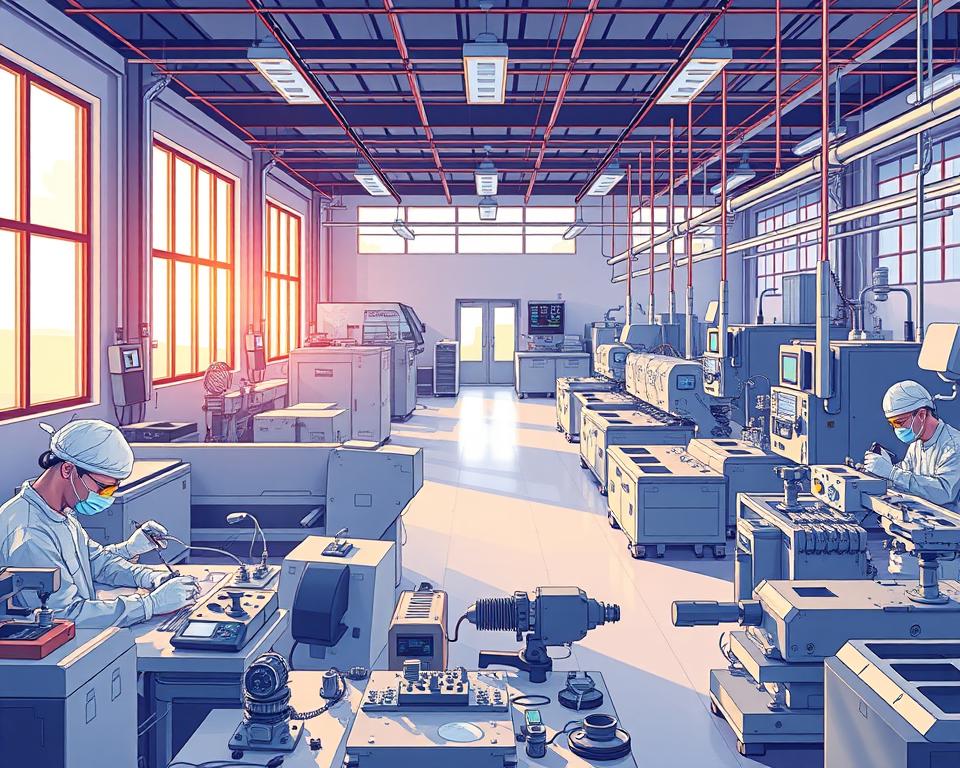
Within healthcare innovation, precision and reliability are essential. The sector responsible for producing life-saving tools – from basic instruments to advanced diagnostic systems – operates under some of the strictest global regulations. Singapore’s MedTech ecosystem showcases this balance by pairing meticulous craftsmanship with smart automation to meet changing patient needs.
With AI quality checks and IoT-linked lines, https://amt-mat.com/cleanroom-vs-white-room-assembly-for-medical-device-manufacturing/ efficiency increases without sacrificing safety. These shifts help manufacturers respond quickly to regulatory changes and keep output consistent. Singapore’s hub status enhances these capabilities, providing solutions for regional demand and international compliance.
What sets leading providers apart? A dual focus on traditional expertise and next-gen innovation. Strong testing protocols plus real-time monitoring ensure products meet exacting specs. With growing complexity, trusted partners must deliver compliance and forward-looking strategies that anticipate future challenges.
Top Points
- Producing healthcare tools demands extreme precision and strict global safety adherence
- Singapore’s MedTech scene blends skilled craftsmanship and advanced automation
- Contemporary tools such as AI/IoT bolster efficiency and reliability
- Successful providers balance regulatory compliance with innovative problem-solving
- End-to-end quality control is essential across production
Overview of Medical Device Manufacturing Best Practices
Creating reliable healthcare tools demands precision at every stage. With rising demand, facilities adopt advanced methods such as 3D printing alongside traditional techniques. This combination enables customization plus scalability for varied needs.
Evolving from Manual to Digital Precision
Historically, production used manual machining with standardized molds. Now, robotics and automation enable intricate designs at micron-level accuracy. For example, 3D printers now create patient-specific surgical guides in hours, a task previously taking weeks.
Speed vs Safety: Finding the Balance
Modern facilities deploy real-time sensors to track quality during production. They flag deviations instantly to cut waste and maintain compliance. Data-driven optimization can reduce lead times by up to 40%.
| Process | Materials | Customization | Typical Applications |
|---|---|---|---|
| CNC Machining | Metals, Plastics | Medium | Surgical tools |
| Injection Molding | Thermoplastic resins | Low | Disposable Tools |
| Additive Manufacturing | Polymers, Alloys | Extensive | Prosthetics, Implants |
In regional hubs like Singapore, cleanrooms and staff training are prioritized. Ongoing CI programs align processes with global standards and enable rapid prototyping.
Innovative Approaches in Medical Device Manufacturing
Modern production strategies now integrate cutting-edge digital solutions with material science breakthroughs. This fusion addresses evolving demands for precision while streamlining development cycles across Singapore’s tech-driven facilities.
Smart Digital Integration in Production Ecosystems
Advanced algorithms analyze equipment patterns to predict maintenance needs weeks in advance. 24/7 sensors adjust parameters automatically to optimize output. These systems cut downtime by about 35% while keeping quality consistent.
Networked environments rely on robust cybersecurity. After high-profile breaches, encrypted protocols and multi-layer authentication protect sensitive patient data. Routine vulnerability testing helps ensure compliance with international standards.
Additive Layer Innovations
- Custom implants matching patient anatomy through detailed 3D scans
- Complex surgical guides produced on demand within 48 hours
- Polymer structures unattainable via conventional methods
Additive techniques enable rapid prototype iteration with biocompatible materials. This approach slashes development timelines by 60% compared to traditional tooling processes. Facilities throughout Asia use these capabilities for tailored, scalable solutions.
Key Technological Shifts in the Industry
The fusion of digital and physical systems is revolutionizing production landscapes. Modern facilities leverage interconnected technologies that analyze real-time data streams, enabling smarter decisions across workflows. It helps satisfy strict compliance and increase operational agility.
Industry 4.0: Smart Factory Adoption
Next-gen factories use cloud-based platforms to connect equipment with decision-makers. Sensors track material flow and energy use, feeding predictive models. Three core benefits stand out:
- Digital twins simulate lines to prevent bottlenecks pre-emptively
- Machine learning tunes parameters for top equipment performance
- Automation flags compliance issues during assembly phases
Robotics & Automation Innovations
Robotic arms use vision systems and force sensors to adapt to tasks. Collaborative https://amt-mat.com/why-cleanroom-matter-in-medical-device-manfacturing robots work alongside engineers, handling repetitive jobs with 0.01mm precision. Such advancements reduce quality-critical errors by ~42%.
Adaptive controls enable rapid product changes with no retooling delays. Facilities using these solutions report 30% faster cycle times while maintaining 99.8% accuracy rates. These capabilities are vital as customization demands rise.
Critical Processes and Technologies in Device Production
Precision engineering drives modern methods for specialized components. Choosing the right approach depends on design complexity, required materials, and scale needs. This section explores key techniques shaping today’s industrial landscape.
Injection Molding and CNC Machining Techniques
Injection processes dominate high-volume projects needing identical parts. A single mold can create thousands of components daily with tolerances under 0.1mm. Applications span disposable devices and protective shells.
CNC systems machine complex shapes in metals or plastics via computer guidance. This method suits final products requiring surgical-grade precision. Setup costs can be high, but consistency for critical geometries is unmatched.
Emerging Role of Additive Manufacturing and FDM/SLA
Layer-based 3D printing overcomes traditional constraints. FDM builds quick prototypes using thermoplastic filaments—ideal for concept tests. SLA achieves smooth finishes via liquid resins for detailed models.
Today’s systems make functional parts from durable polymers and metals. These methods enable custom solutions like patient-matched implants. Rapid iterations dramatically reduce development timelines vs conventional approaches.
| Process | Volume Suitability | Lead Time | Key Benefits |
|---|---|---|---|
| Injection Molding | High volume (10k+) | 2–8 weeks | Low unit cost |
| CNC | Medium volume (500–5k) | 1-3 weeks | ±0.025mm accuracy |
| FDM Printing | 1-100 units | 2-5 days | High design flexibility |
| SLA | 1-50 units | 1–3 days | 0.005mm resolution |
| SLS | 10-500 units | 3-7 days | No support structures needed |
Material selection remains crucial across all methods. Biocompatible polymers plus sterilizable alloys satisfy strict safety standards. Engineers combine techniques to balance speed, cost, and performance.
Quality & Regulatory Practices
To navigate global standards, align technical expertise with documentation rigor. Producers must balance evolving requirements while maintaining operational efficiency across international markets.
Understanding FDA and Global Regulatory Standards
The FDA categorizes healthcare tools into three risk-based classes. Class I (e.g., bandages) need general controls; Class III implants require clinical trials and PMA. Compliance revolves around eight core areas:
| Area | Requirement | Focus |
|---|---|---|
| Quality Systems | 21 CFR Part 820 | Validation |
| CE | EU MDR 2017/745 | Clinical eval |
| ISO 13485 | Risk mgmt | Supplier audits |
| MDR/eMDR | eMDR | Post-market |
Facilities in Singapore adopt hybrid frameworks to satisfy ASEAN and EU markets simultaneously. Real-time tracking helps teams adapt to new amendments.
Rigorous Change Management
Modification protocols prevent compliance gaps during product updates. Teams evaluate design, labeling, and production impacts prior to changes. Key steps are:
- Record change rationale and risk analysis
- Obtain cross-department approvals
- Refresh training materials inside 72 hours
CAPA automation flags deviations during QC and triggers corrective actions. This proactive approach reduces recall risks by 28% compared to manual methods.
Production Efficiency and Supply Chain Optimization
Modern AMT production success balances financial targets with operational agility. Teams align pricing strategies with market realities and build resilient supplier networks. Three elements prove critical: accurate cost modeling, responsive logistics, and adaptable assembly processes.
Cost Targets, Market Analysis, and Supplier Strategies
Set viable prices by starting with competitor benchmarks. Review 5–7 similar offerings to define pricing bands. Factor in material costs, regional tariffs, and perceived value. Teams in Singapore use predictive tools to simulate market reactions pre-launch.
Supplier relationships should diversify without losing quality. Maintain 2-3 verified vendors for critical components. Use scorecards to track delivery accuracy and defect rates. Smart contracts automate reorders when inventory falls below safety stock.
Choosing a Scalable Manufacturing Partner
Assess potential partners across four lenses:
- Demonstrated expertise in regulated fields
- Capacity to handle 300% volume spikes
- Integrated QC at each assembly stage
- End-to-end services spanning prototyping through cold chain logistics
Top Asian partners provide modular lines able to switch batches to mass output in 72 hours. Such flexibility is crucial for market entry and sudden demand changes.
Conclusion
As healthcare evolves, production methods adapt to meet new challenges. Blending smart tech with patient-centric design reshapes how critical tools reach care settings. From 3D-printed implants matching bone structures to AI-optimized supply chains, innovation drives progress across the industry.
Singapore’s precision-systems expertise keeps it at the forefront of these advances. Facilities now create synthetic blood vessels and drug delivery mechanisms using layered fabrication techniques. These breakthroughs demonstrate how engineering creativity expands treatment options worldwide.
Three trends will shape future development:
- Integration of adaptive AI across design and testing phases
- Solutions customized via real-time health data analytics
- Eco-conscious materials meeting strict safety requirements
Balancing technical capability with regulatory agility is key to success. Those embracing digital transformation and rigorous quality protocols will lead the next wave of healthcare improvements. Going forward, human expertise combined with machine precision yields smarter, safer solutions for all.